Pharma AI for the R&D lab: four tools, one platform
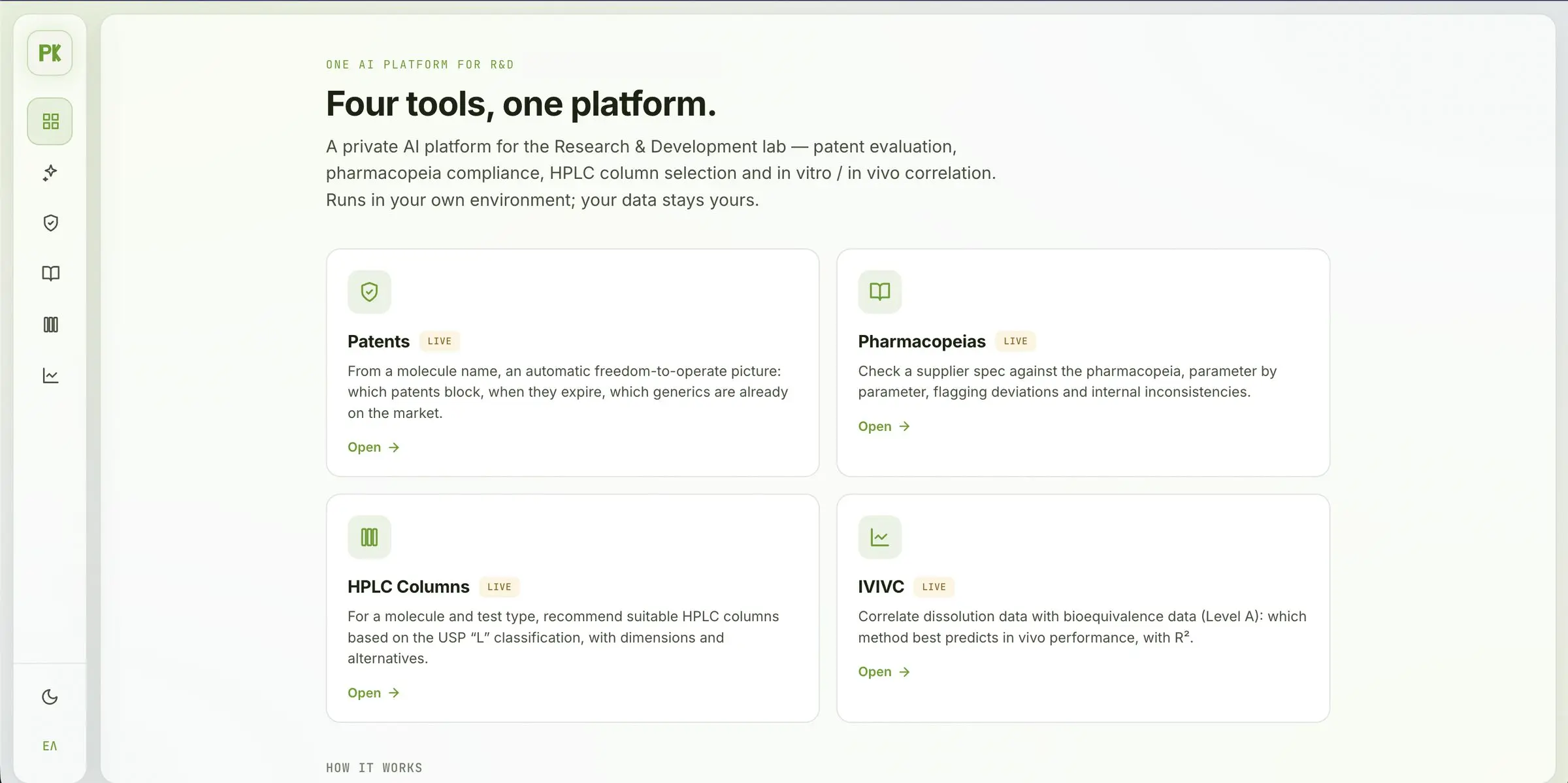
I built a private AI platform for pharmaceutical R&D. It does four jobs that usually take someone hours of searching and copying between documents: patent screening per molecule, checking a supplier spec against the pharmacopeia, choosing HPLC columns, and in vitro / in vivo correlation. An assistant sits on top and answers only from the platform's own data.
It's a working demo, shown privately behind an access code. The screenshots below are from it.
Patent screening per molecule
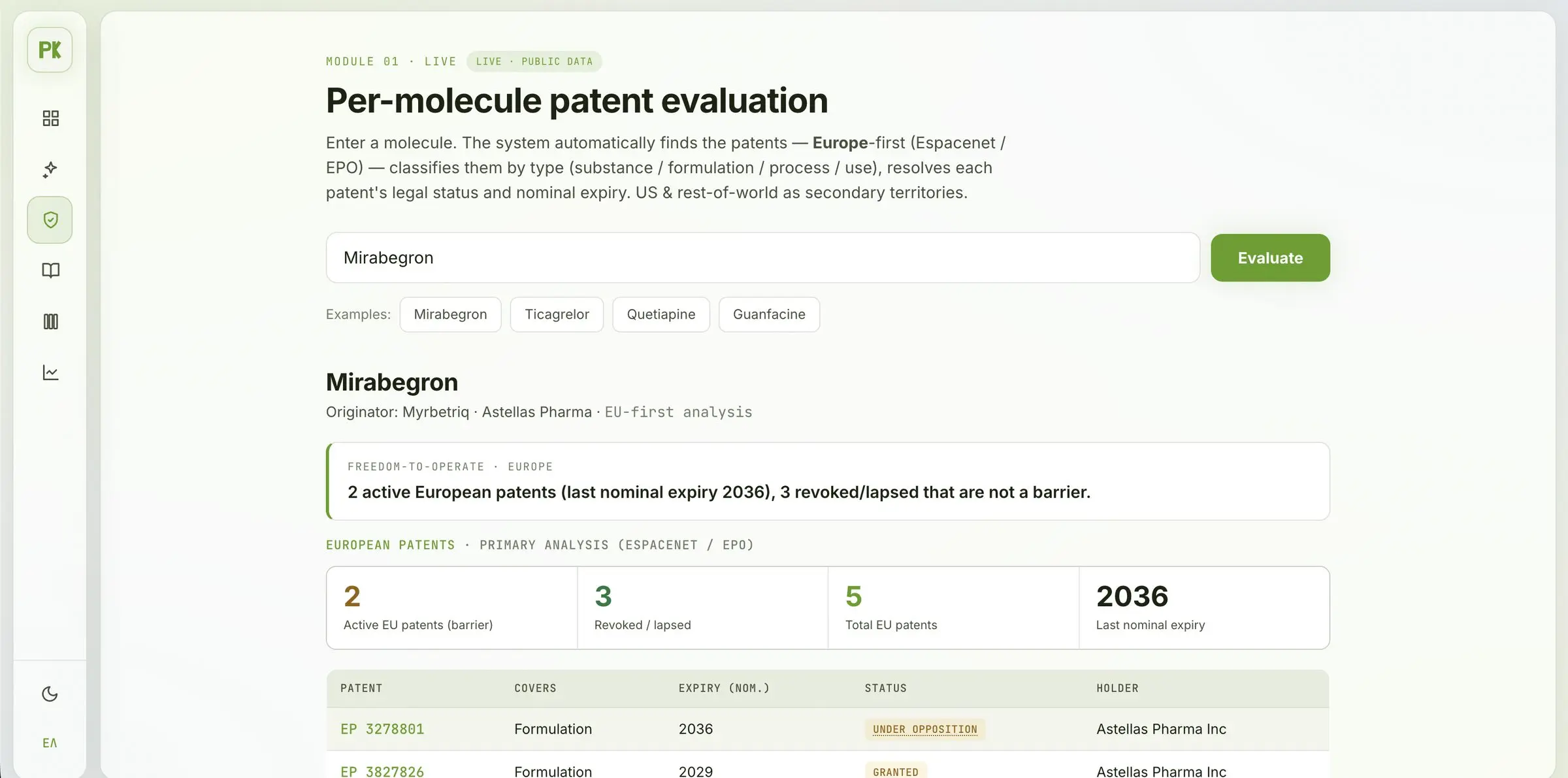
You type a molecule. The platform finds its patents, Europe first (Espacenet / EPO), with the US and the rest of the world as secondary territories. It classifies each patent by type (substance, formulation, process, use), resolves its legal status and nominal expiry, and writes a one-line freedom-to-operate summary for Europe.
For mirabegron, on 18 October 2026, the summary read: 2 active European patents, the last nominal expiry in 2036, and 3 revoked or lapsed that are not a barrier. It's a screening that tells your IP team where to look, not a legal opinion.
Pharmacopeia and supplier spec check
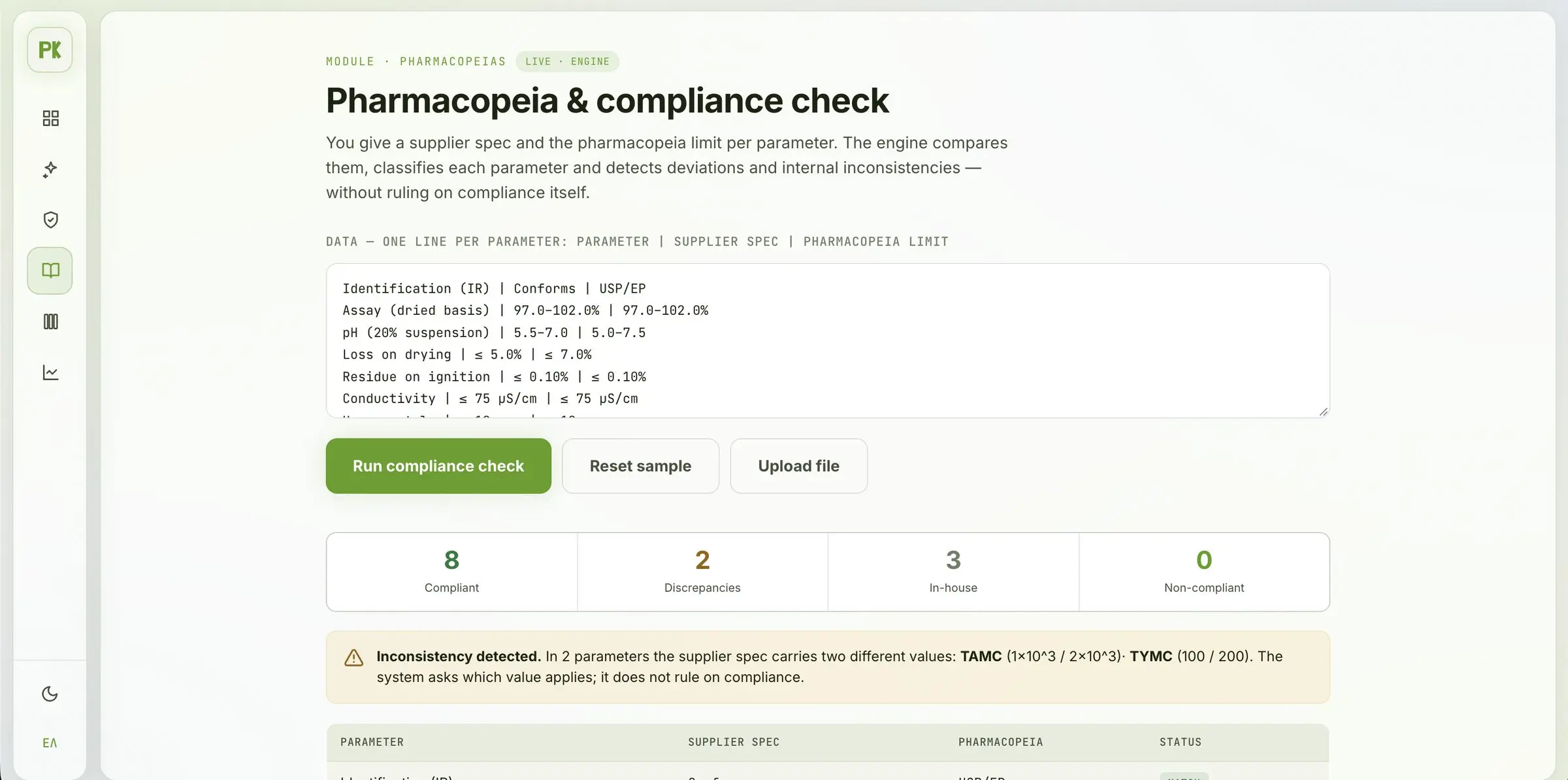
You paste or upload the supplier spec and the pharmacopeia limit for each parameter. The engine compares them line by line, classifies each parameter and flags two kinds of problem: deviations from the limit, and inconsistencies inside the spec itself, such as a parameter given with two different values. It doesn't rule on compliance. That decision stays with QA/QC.
HPLC column selection
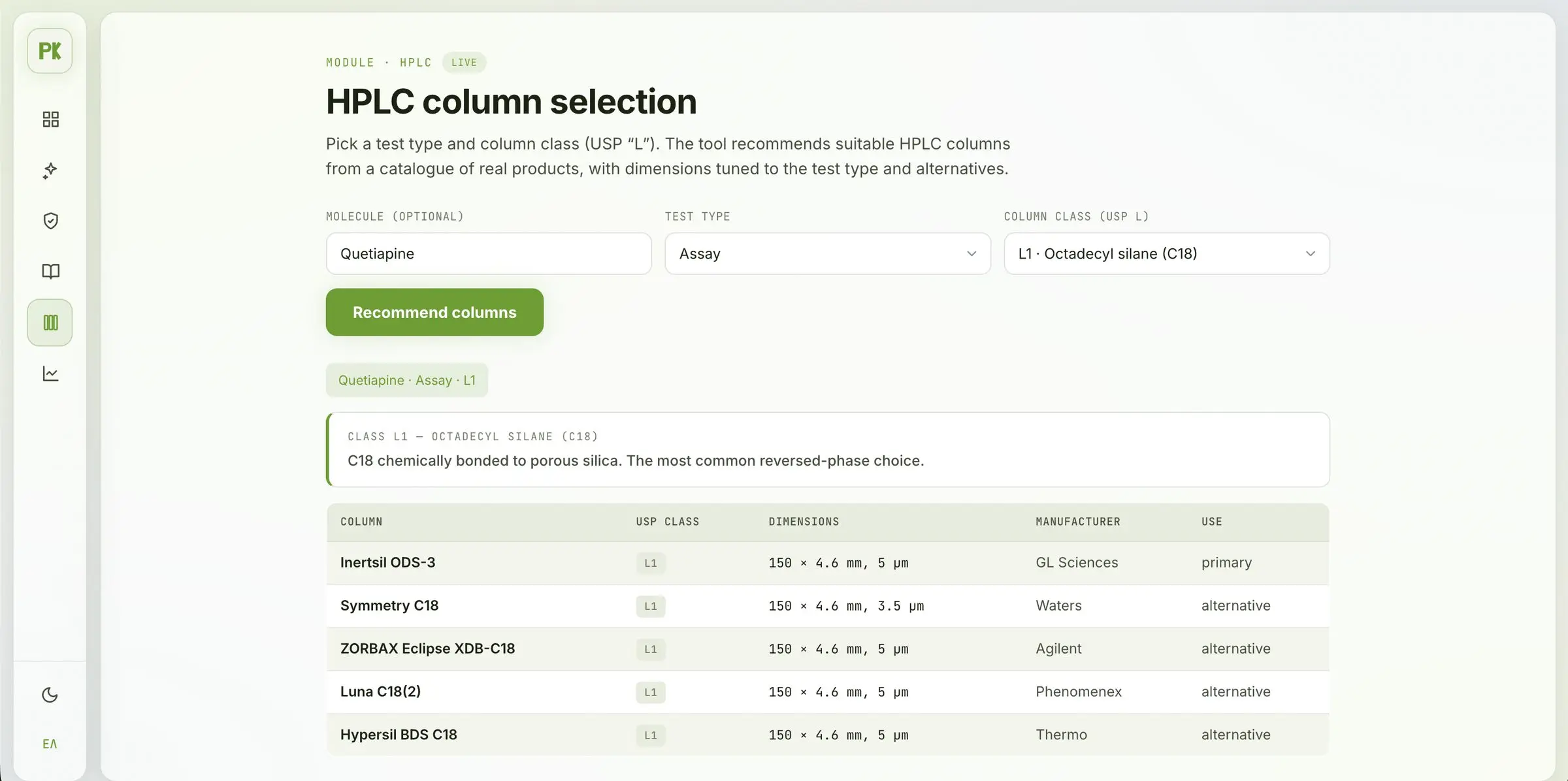
Pick the test type and the USP "L" column class, and optionally the molecule. The tool recommends columns from a catalogue of real products, with dimensions suited to the test and alternatives from other manufacturers. For a quetiapine assay on L1 (C18), it put Inertsil ODS-3 first and listed Waters, Agilent, Phenomenex and Thermo columns as alternatives.
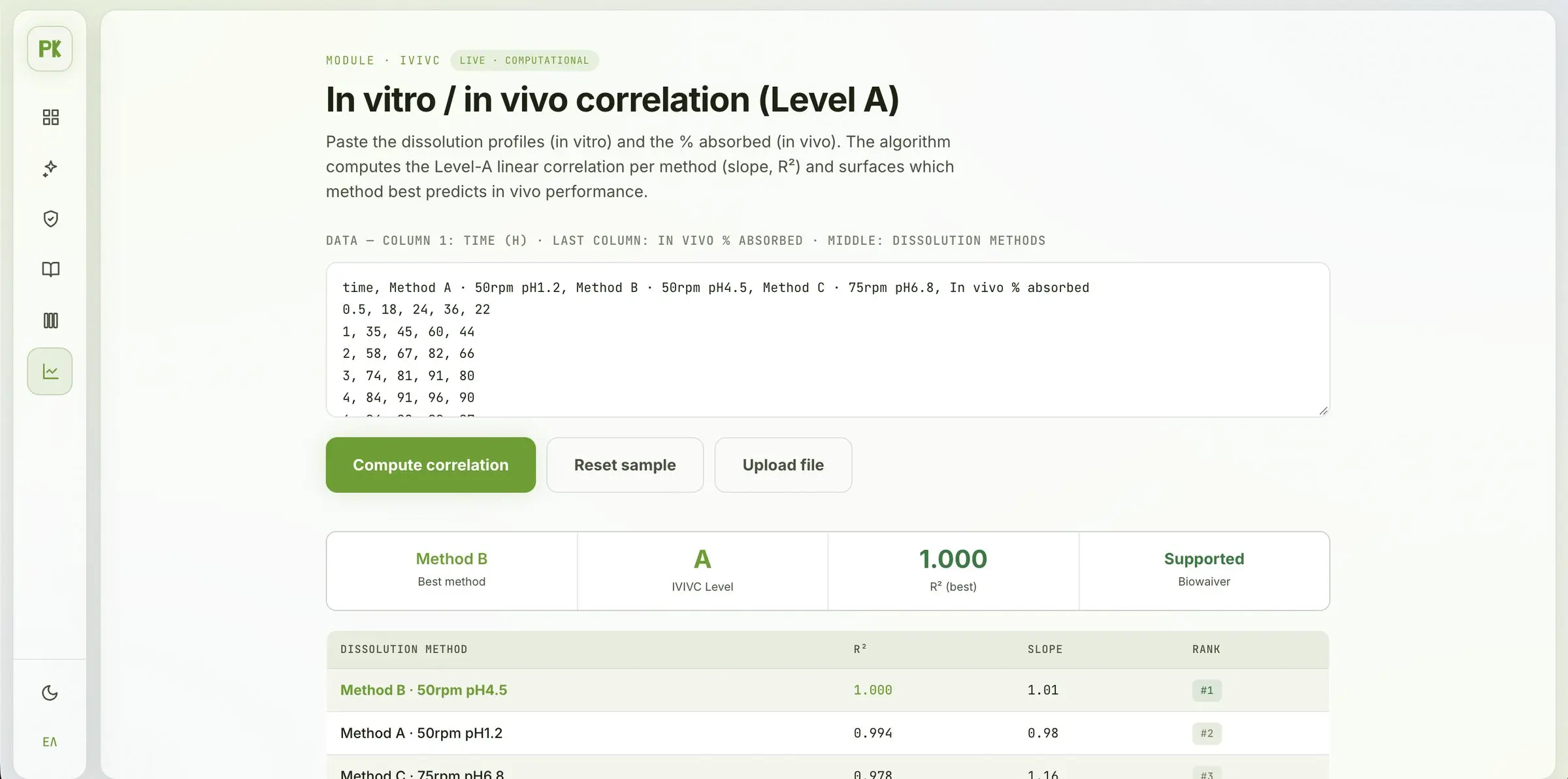
In vitro / in vivo correlation (Level A)
Paste the dissolution profiles and the percentage absorbed in vivo. The tool computes a Level A linear correlation for each dissolution method (slope and R²) and shows which method best predicts in vivo performance. The screenshot runs on the demo's sample data.
An assistant that answers from the platform's data
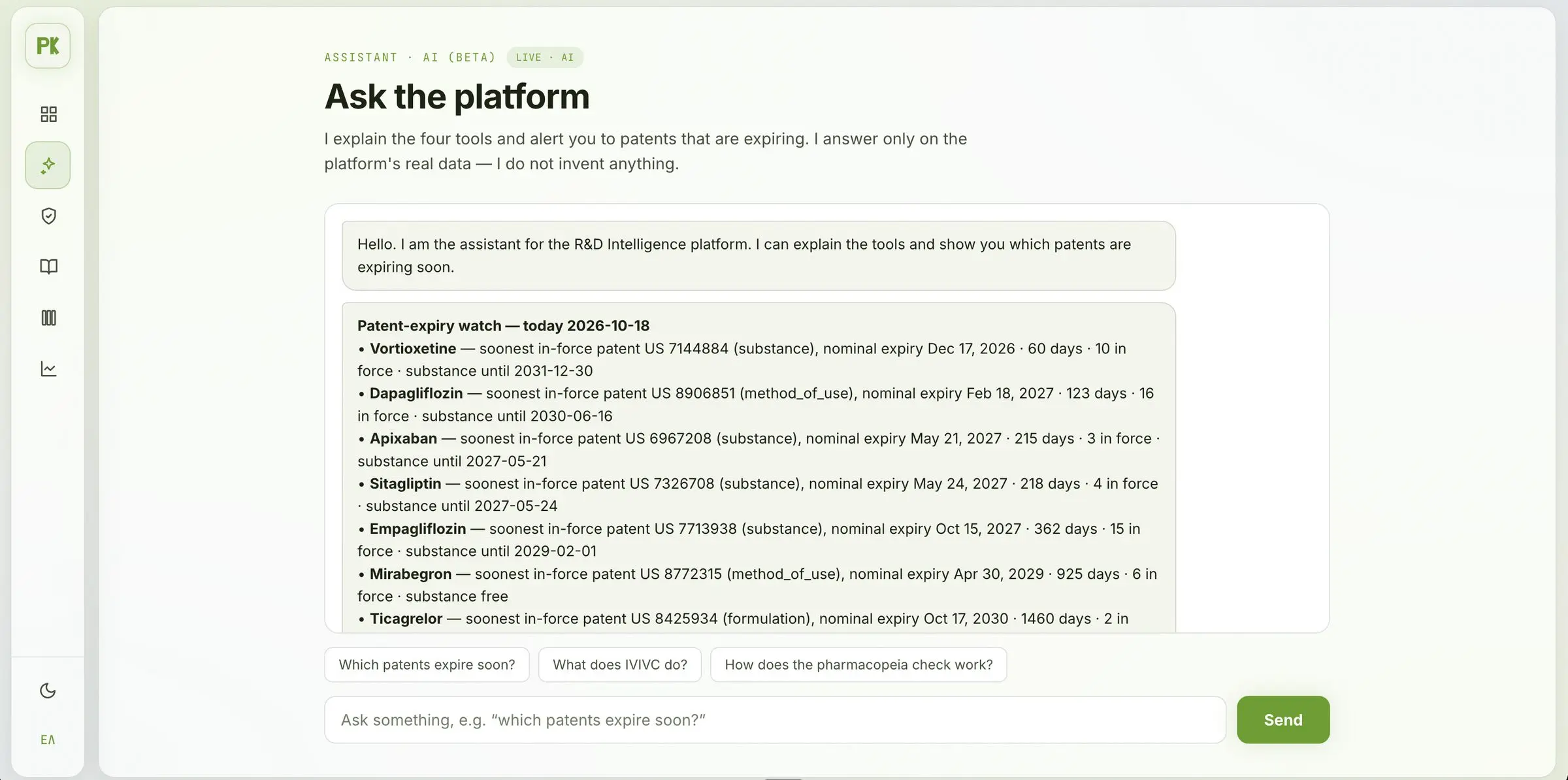
The assistant explains the four tools and keeps a patent-expiry watch: for each tracked molecule, the soonest in-force patent and how many days are left. It answers only from the platform's data and doesn't invent anything.
Your data stays yours
The usual reason an R&D team doesn't paste molecules and supplier specs into ChatGPT is that they can't. The platform is built to run in your own environment, and which model runs where is agreed before any of your data goes in.
The same way of working, documents in and a checked answer with its source out, is behind my other AI automation work, for example vessel templates filled from ships' own manuals in maritime AI.
FAQ
Is this a finished product?
It's a working private demo with four live tools and an assistant. I show it to R&D teams behind an access code. A deployment for a company is set up for that team: its molecules, its suppliers' specs, its own environment.
Where does the patent data come from?
From public patent databases, Europe first (Espacenet / EPO), with the US and the rest of the world as secondary territories. The result is a screening that tells your team where to look, not a legal opinion. The freedom-to-operate decision stays with your patent attorney.
Does the pharmacopeia check decide whether a material is compliant?
No. It compares the supplier spec with the pharmacopeia limit parameter by parameter, classifies each one and flags deviations and internal inconsistencies, such as a spec that gives two different values for the same parameter. The compliance decision stays with your QA/QC team.
Can it run on our own data without sending it to a public AI service?
The platform is built to run in your own environment, so internal specs and study data stay with you. Which model runs where is agreed per deployment, before any of your data goes in.
How do I see it?
Send me a message and I'll send you the access code, or walk you through it on a short call with one of your own molecules.
What does it cost?
There's no fixed price. It depends on which tools you need and what has to connect to your systems, so the quote comes after a call. Prices are always before 24% VAT.
Ask for the access code.
Tell me your role and which of the four tools you'd look at first. I reply myself, within a day, with the code or a time for a short walkthrough.
Or write directly to me@pkarampetsos.com